





Mud Fever in Horses: Treatment and Prevention
Waterlogged pastures, paddocks turned into puddles, pasterns that never quite dry… 🌧️ As fall sets in, a familiar worry returns to the barn: mud fever. Scabs, matted hair, raw skin, sometimes even lameness—this skin condition can quickly make winter miserable for your horse (and for you!).
The good news: mud fever responds well to early care and, better still, it can be prevented. In this guide, we’ll explain what it really is, how to recognize it, how to treat it step by step, and the habits that help keep pasterns healthy until spring 🐴
The essentials in 30 seconds 🔥
Mud fever (or pastern dermatitis) is inflammation of the skin on a horse’s legs, often associated with the bacterium Dermatophilus congolensis (in which case it’s called dermatophilosis). It develops when the skin stays wet and muddy for extended periods.
- Symptoms: scabs, hair coming away in tufts, red or weeping skin, and swelling around the pastern.
- Treatment: wash with an antiseptic soap, soften and remove scabs, dry thoroughly, apply a suitable cream, keep your horse dry, and trim the hair.
- Prevention: limit exposure to mud, dry the legs after turnout, apply a barrier cream, and check the pasterns daily.
- Veterinarian: essential if your horse is lame, has a very swollen leg or a fever, or shows no improvement after about 10 days.
What is mud fever in horses?
Mud fever is a form of pastern dermatitis: inflammation of the skin at the back of the pastern, between the fetlock and the hoof. In advanced cases, it can extend up to the cannon bone. Despite its name, it has nothing to do with mite-caused mange. Above all, it’s a matter of skin weakened by moisture. 💧
It’s also known in French as “crevasses” or “eaux aux jambes,” and in English as mud fever. These names describe a condition with several possible causes, rather than one single disease.
Mud fever and dermatophilosis in horses: what’s the difference?
Dermatophilosis is a skin infection caused by the bacterium Dermatophilus congolensis. It is the cause most commonly associated with mud fever, but not the only one. Similar scabbing can also involve:
- other bacteria (particularly staphylococci) that take advantage of tiny breaks in the skin;
- fungi (dermatophytes);
- Chorioptes mites, especially in horses with heavy feathering;
- photosensitization, which tends to affect white leg markings (areas of pink skin).
In practice, equine dermatophilosis develops when the skin stays soaked: the bacterium, found in the environment and sometimes on healthy horses’ skin, takes hold when the skin’s protective barrier softens. That’s why it’s called “mud fever”: mud isn’t the direct cause, but it creates ideal conditions.
Why does my horse have mud fever? 🤔
Mud fever develops when several factors come together. The main one is skin that stays wet for too long. Here are the conditions that make it more likely.
Mud around the pasterns and prolonged moisture
This is the biggest factor. A horse standing all day in a muddy paddock, waterlogged pasture, or damp bedding has constantly wet pasterns. The skin softens and cracks, allowing bacteria in. Mud drying on the hair can also form an abrasive crust that irritates the skin with every step.
Friction and tiny breaks in the skin
Tall, wet grass (including morning dew), stubble, rocky ground, or poorly fitted boots can cause tiny, unseen breaks in the skin. Each one gives infection a way in.
Horses most at risk
Some horses are more susceptible than others:
- Horses with white markings on their legs: their less-pigmented pink skin is more delicate.
-
Horses with heavy feathering (draft horses, cobs, Friesians…): feathering traps moisture and hides early lesions.
- Horses with weakened immune systems: due to age, illness, parasites, or nutritional deficiencies.
Care mistakes that make it worse
Sometimes, even well-meant care can make things worse.
❌ Hosing down the legs every evening without drying them keeps the skin damp.
❌ Clipping too close just before rainy weather leaves the skin exposed
❌ Sharing brushes and towels between horses can spread bacteria.
How can you recognize mud fever?
You can feel the first signs of mud fever before you can see them. Make a habit of running your hand over the back of your horse’s pasterns every time you groom: that’s where it starts 👀
The first signs
- Raised or matted hair that forms small tufts.
- Small scabs you can feel with your fingers, sometimes hidden beneath the feathering.
- Slightly pink, sensitive skin: your horse pulls its leg away when you touch it.
Signs that mud fever has taken hold
- Thick gray scabs that come away with the hair, leaving red, moist skin underneath (the characteristic “paintbrush” tufts).
- Yellowish discharge or cracks in the crease of the pastern.
- A warm, swollen pastern, sometimes with swelling up to the cannon bone.
- Significant pain, or even lameness.
Hind legs are often affected more than front legs, and white legs more than dark ones.
Mud fever or something else?
Several conditions can look very similar: pastern vasculitis (often limited to white markings and made worse by sunlight), chorioptic mange (intense itching and foot stamping), or ringworm. If you’re unsure, or the lesions don’t match the description above, only your veterinarian can make an accurate diagnosis, sometimes with a skin scraping.
How do you treat mud fever?
Good mud fever care rests on three essentials: clean, care for the skin, and keep it dry. Cream alone won’t be enough if your horse is back in the mud the next day. Here’s the routine to follow 🧴
Step 1: keep your horse dry
This is the most important step toward recovery. If possible, move your horse to a clean, dry environment or a less muddy turnout area while treating them. Otherwise, the other steps will be much less effective.
Step 2: clear the area
Carefully trim the hair around the lesions with scissors or small clippers. This helps you see the full extent of the scabs, clean the area more thoroughly, and apply treatments to the skin. For a horse with feathering, this step makes all the difference.
Step 3: wash with a mild antiseptic soap
Wash the area with lukewarm water and a suitable soap, massaging gently. Leave it on for a few minutes to soften the scabs, then rinse thoroughly: soap residue can irritate the skin.
Step 4: gently remove the scabs
Scabs harbor bacteria, so they need to be removed… But never when dry or by force. Once softened, they should come away easily with your fingers. If they don’t, apply an emollient cream the day before and try again the next day. Pulling off a scab that’s still attached can make the skin bleed and hurt your horse, who may then resist further care.
Step 5: dry thoroughly
Pat dry with a clean towel (one per horse, washed after each use), then let the area air-dry. The skin must be completely dry before you apply a treatment.
Step 6: apply a suitable treatment
That’s where targeted care comes in. Here are our OHLALA picks:
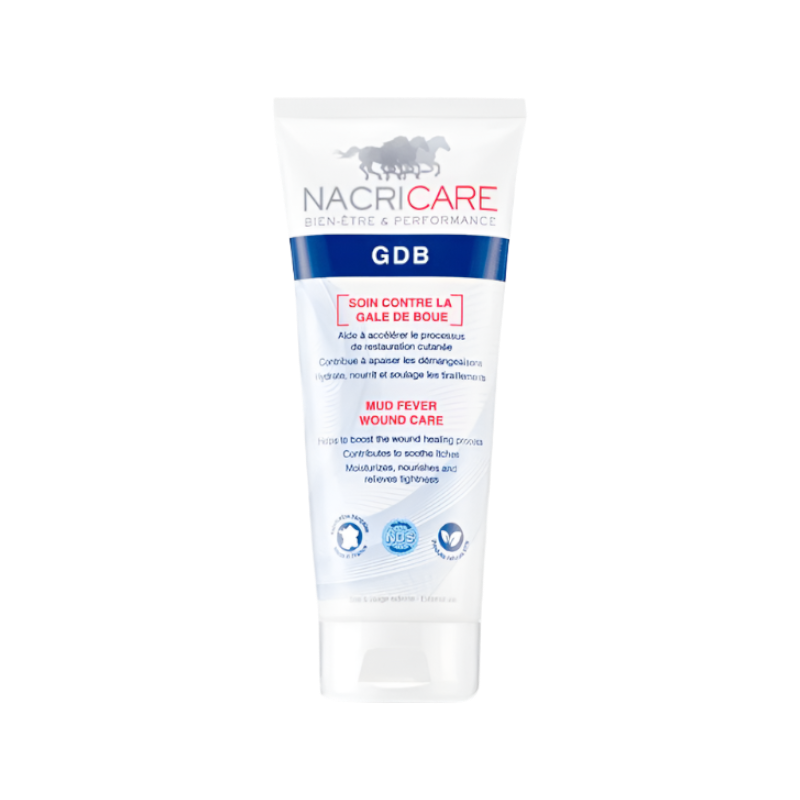
- To soothe and cleanse: Nacricare GDB soothing mud fever cream, made in France with shea butter, marine biopolymers, sage, rosehip oil, and clove. A trusted favorite among our customers.
- To support skin regeneration: Paskacheval Paskagal regenerating ointment, an emulsified ointment designed for legs exposed to moisture. It supports skin regeneration and helps soothe itching.
- For thickened, hard-to-reach areas: Absorbine Mud Defense Silver Honey spray, formulated for the pasterns and heel bulbs in wet conditions. It combines Manuka honey and MicroSilver BG® and can be applied without touching the skin—a welcome option for sensitive horses. 🍯
Repeat the care routine once a day, gently cleaning the area before each application. Mild mud fever caught early generally takes one to two weeks to clear.
What about feed supplements?
Healthy skin is supported from within, too. Alongside topical care, targeted nutrients (zinc, copper, biotin, fatty acids…) may help support skin health in horses prone to recurring mud fever. Ask your veterinarian which formula is right for your horse, perhaps from our range of feed supplements
How can you prevent mud fever all winter?
The best mud fever is the kind you never have to treat! 😉 Prevention comes down to simple habits you can add to your routine as soon as the first fall rains arrive.
Manage the pasture and paddock
- Rotate turnout areas so one spot doesn’t turn into a muddy mess.
- Reinforce high-traffic areas—the pasture entrance and the ground around the water trough and hay feeder—with wood chips, gravel, or ground-stabilizing mats.
- Provide a shelter or raised area where your horse can stand on dry ground.
- In the stall, keep bedding clean and dry: remove wet patches every day.
Apply a barrier cream
For a horse prone to mud fever, applying a protective cream to clean, dry legs before turnout helps limit direct contact between the skin and mud. Nacricare Nacrimud pastern protection cream contains zinc oxide and lanolin to form a protective barrier while nourishing the skin. Apply a generous layer to the crease of the pastern. 🛡️
Should you clip your horse’s feathering?
It’s THE great barn debate! Feathering naturally protects the skin from rain, but it also traps moisture and hides lesions. Our advice: leave it on a healthy horse, perhaps trimming it to an even length. For a horse that has had mud fever before, a light trim makes it easier to spot problems and provide care.
Build good hygiene habits
- A separate brush and towel for each horse.
- Keep boots and wraps clean and dry; never leave them on while damp.
- Check the pasterns daily.
- A balanced diet and regular deworming to support healthy skin and immunity.
When should you call your veterinarian?
Mild mud fever can usually be managed at the barn. But some signs mean it’s time to call your veterinarian without delay 📞:
- Lameness, even if mild.
- A very swollen, warm leg, with swelling extending above the fetlock.
- A fever, or a horse that seems listless and eats less.
- Widespread lesions that are deep or bleeding.
- No improvement after 7 to 10 days of consistent care.
- Repeated flare-ups despite good preventive care.
In these cases, the infection can spread to the tissues beneath the skin. Your veterinarian may take a sample to identify the exact cause and, if needed, prescribe an appropriate antibiotic or antiparasitic treatment. Topical care remains a valuable complement; continue it as directed.
FAQ: your questions about mud fever
Is mud fever contagious?
It isn’t highly contagious, but it can spread. The bacterium Dermatophilus congolensis can pass between horses through shared equipment such as brushes, towels, and boots. Keep separate equipment for the affected horse and wash your hands after providing care.
Can you ride a horse with mud fever?
Yes, if the mud fever is mild and your horse isn’t lame. Avoid muddy ground, don’t put boots or wraps over open lesions, and clean the legs after riding. If your horse is lame or the leg is swollen, give them a rest and consult your veterinarian.
How long does mud fever treatment take?
Generally one to two weeks for a mild case treated early while the horse is kept dry. More established or complicated cases may take several weeks and require veterinary follow-up.
Should you remove mud fever scabs?
Yes, because they harbor bacteria. But always soften them first (with warm water or an emollient cream) and remove them gently. Never pull them off while dry.
Does mud fever only occur in winter?
No. It’s more common in fall and winter, but it can also occur in spring or summer—for example, because of morning dew, wet pasture, or frequent hosing without thorough drying.
What’s the difference between mud fever and dermatophilosis?
Mud fever refers to a range of pastern skin lesions associated with moisture. Dermatophilosis is an infection caused by the bacterium Dermatophilus congolensis and is its most common cause. Dermatophilosis of the pastern is a form of mud fever, but not all mud fever is dermatophilosis.
Healthy pasterns all winter? It’s possible!
Mud fever doesn’t have to be part of winter. With a watchful eye during grooming, a good routine after turnout, and the right care at the first sign of scabs, your horse can get through the season with (almost) dry feet. 🍂
Related products
You already have variants in your wishlist.

You already have variants in your wishlist.