






Horse familiarization at competitions: why this session changes everything
Introduction: what if the key to your next competition was decided the day before?
You spend weeks preparing your horse, refining your technique, working on fitness… but have you thought about the familiarisation session the day before the competition?
In equestrian sport, a schooling session on site the day before a competition is not only permitted by the rules — it is also strongly recommended by top riders and trainers. Yet this practice remains underused by amateur riders.
Why is familiarisation a genuine performance lever? How can you use it effectively? Discover our insights, along with advice from our professional riders who have made it part of their routine.
What is horse familiarisation at a competition?
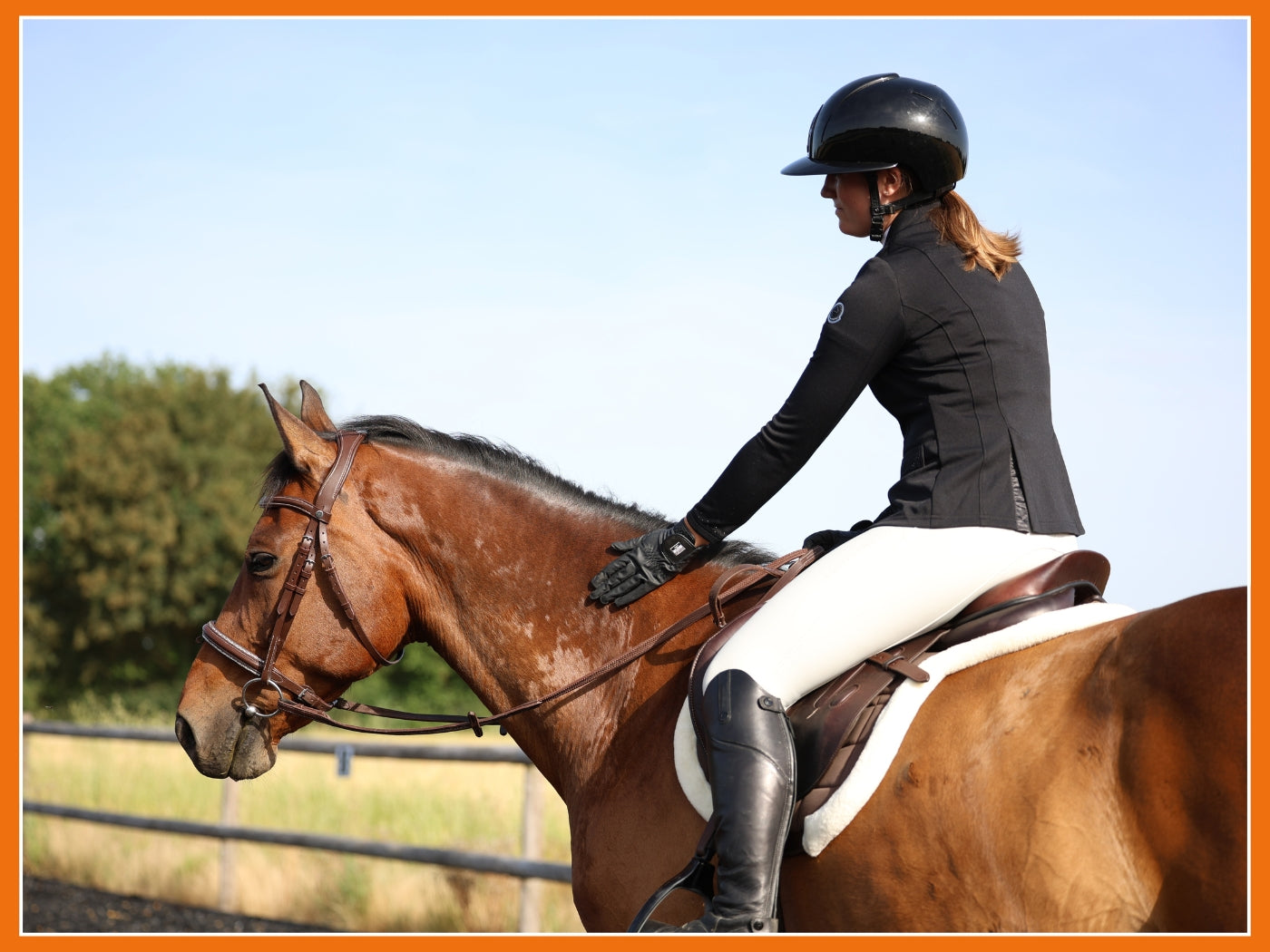
Familiarisation refers to the schooling session carried out at the competition venue, usually the day before the event, to allow the horse to acclimatise to its new surroundings. It can take several forms:
- In-hand or lungeing work
- A ridden session
- An introduction to the arena
The goal is not to exhaust the horse or repeat complex technical exercises, but to reduce environmental stress before competition day and make those final adjustments 🔥
The proven benefits of familiarisation
1. Reducing stress and anxiety in the horse
A horse arriving directly on the morning of a competition can be overwhelmed by stimuli: unfamiliar smells, other horses, the atmosphere and noise, the crowd, decorated fences… This physiological stress triggers an adrenaline surge that can affect concentration.
The session the day before allows the horse to grow familiar with the environment, without the pressure of competition. Studies in equine behaviour confirm that gradual, stress-free exposure to an unfamiliar environment durably reduces fear responses. The nervous system has time to settle before the following day's competition.
2. Optimising competition-day logistics
By arriving the day before, you avoid the stress of a last-minute morning journey, unexpected traffic, and you allow your horse to rest for the night before competing ✨
3. Allowing the rider to adapt too
Familiarisation doesn't only benefit the horse! It's also an opportunity for the rider to:
- Identifying the terrain's specific characteristics (ground firmness, camber, orientation)
- Identifying potentially stressful areas for your horse (arena corners, grandstand entrance…)
- Fine-tuning the next day's warm-up plan 💪
Familiarisation: what do the rules say?
Rules vary depending on the federation and the discipline:
- In Showjumping (FFE/FEI): ridden work the day before is permitted in the warm-up arenas.
- In Dressage: riders may work in the arenas or schooling areas provided, often within set hours defined by the organiser.
- In Eventing: the cross-country course walk on foot is regulated, but a general familiarisation of the site is possible from the day before.
Always check with the organiser regarding arena access times and any restrictions that may apply 😉
How to organise an effective familiarisation session?
Duration and intensity: less is more
The familiarisation session is not meant to tire your horse. Aim for 20 to 40 minutes maximum, at moderate intensity. The goal is relaxation, not performance.
Progression and reading the environment
Start with a walk-in on the ground: let your horse observe, sniff, and listen. Then mount up, working first in the quieter areas before gradually approaching anything that might catch him off guard (grandstands, loudspeakers, large banners…).
Ending on a positive note
Always end the session on a successful exercise, with lightness. Your horse should leave the arena relaxed and confident — that feeling will stay with him until the next day 😉
Adapting to each horse's profile
A very sensitive horse will need more time for passive exploration. A relaxed horse can be worked more technically if needed. Knowing your horse's character is key to getting the session right 🥰
❌ Mistakes to avoid
- Arriving too late the day before: if the venue is only accessible late in the afternoon, a short session is better than nothing — but plan ahead.
- Overworking the horse: a session that is too long or too intense the day before can lead to muscle soreness and deplete energy reserves.
- Neglecting recovery: after the familiarisation, your horse must be able to rest in a clean stable, with water always available and quality forage.
- Ignoring signs of stress: if your horse panics at the venue the day before, don't push through it. Go back to basics — reassurance comes before training.
Riders share their experience: familiarisation, a habit that pays off
🚀 From Mina Saiagh, one of our eventing riders:
« In eventing, familiarisation is generally carried out the day before or on the morning of our dressage test. Depending on the competition, we may be allowed to work in all three gaits, both inside and outside the arena, while at others we are simply permitted to walk around on a long rein.
In general, the aim is to allow horses to discover the venue and get comfortable with the various elements that might surprise them (screens, decorations, flower pots, etc.). I pay particular attention to ensuring they are as calm as possible and attentive to my aids. For example, when the ground is grass, I'm happy to let them graze for a few moments if they want to.
The most important thing is that they leave with a positive and comfortable experience of this place, ahead of the upcoming test. »
🐴 Familiarisation: the small detail that changes everything — the perspective of Clara Cazeneuve!
Just minutes before riding their dressage test, eventing riders often have the opportunity to carry out a familiarisation of the arena. A brief moment… but far from insignificant!
👀 For the horse, it's a chance to discover the environment: the decorations, judge's boxes, the crowd, and the arena letters. This first introduction helps him feel more settled when it's time to enter the ring.
🎯 For the rider, it's the moment to get their bearings, visualise the test, and build confidence before the bell rings. In eventing, where every point counts, a strong start can make all the difference.
✨ Ultimately, these few minutes are far more than a formality: they support your horse's well-being, strengthen the partnership, and allow you to approach the dressage test with greater confidence and serenity!
For our dressage riders:
Mado Pinto:
« Familiarisation at a competition is essential for me. I adapt this acclimatisation time to each horse. For some, I keep it very brief — there are often many horses on the arena at the same time, and some can feel overwhelmed or unsettled by the others.
With other horses, on the other hand, I really take the time to walk them around the arena so they can discover their new environment calmly and without stress. I have no set routine, other than putting together the session that is most suited to each individual horse.
In my view, it's essential that this familiarisation takes place in the best possible conditions, so the horse is relaxed, confident, and ready to deliver his test at his very best. »
Alexia Pittier:
« For me, familiarisation is a key step at a competition. It allows the horse to discover his environment and approach his test in the best possible conditions.
An approach tailored to each horse
• Some horses need to walk a lot to observe and get their bearings.
• Others relax better with a few minutes of trot and canter.
• My goal is always the same: a calm, loose, and confident horse.
My routine
I always start with a lap of the arena. It gives my horse a chance to take in his surroundings. I then allow him a few moments to observe the area before gradually beginning the session — never rushing him.
The exercises I favour
I always prioritise relaxation work first. I then move into simple transitions, followed by trot and canter with a focus on fluidity. I'm not looking to do any technical work at this stage — my main goal is a loose, responsive horse.
Sultan's example
With Sultan, we have our own little ritual. I take the time to walk around the arena on horseback, with my trainer by my side. This moment allows us to create a calm atmosphere and let him fully take in his surroundings while unwinding.
I then work him for a fairly short time. As soon as I feel he's relaxed, connected, and comfortable in his surroundings, that's enough for me. I prefer to leave him in peace so he can hold onto all his calmness and freshness for the competition.
💡 What experience has taught me: a good familiarisation isn't necessarily a long one. The key is to listen to your horse and adapt to his needs. »
✨ And from Marie Catrevault, showjumping rider:
« I tend to think of familiarisation as the first step of my competition performance. Before even thinking about the test, I like to take the time to let my horse observe his surroundings and understand where he is. Every horse reacts differently: some barely glance around, while others need a little more time to build their confidence.
I use this moment to assess his state of mind and build a genuine connection before entering the ring. I always favour simple work, with plenty of transitions and lightness, to achieve a relaxed, attentive, and responsive horse.
In my eyes, a good familiarisation session allows you to approach the competition with greater peace of mind. It's an investment of just a few minutes that can truly make a difference to the quality of the work that follows. »
Frequently asked questions about familiarisation (FAQ)
Is familiarisation compulsory? No, it is never compulsory. But it is strongly recommended, especially for young horses, sensitive horses, or when competing at a new venue for the first time.
How early before the competition should you arrive? Ideally, the day before. If not, at least 2 to 3 hours before your start time to allow for a calm walk-in and a relaxed warm-up.
Is familiarisation useful for experienced horses? Yes — even seasoned competition horses benefit from a brief site reconnaissance, particularly to adjust to the specific ground conditions and acoustics.
Conclusion: invest 30 minutes the day before to perform on competition day
The horse familiarisation session at a competition is one of the simplest and most effective ways to improve your results in equestrian sport. It requires no special equipment or advanced technique — just attentiveness to your horse, and a little logistical planning ahead.
Make the day before the competition a moment dedicated to your horse: you're giving him the best possible conditions to show his full potential the next day.
Don't miss these articles
Rooted in nomadic tradition, mounted archery blends riding and archery into a discipline that is as physical as it is mental. Recognised by the FFE and open to riders from Galop 1 onwards, it is pr...
Preparing a horse for competition goes beyond training. Coat presentation is an integral part of the performance: in hunters or dressage, judges pay close attention to it. And for you — rider or ow...


